
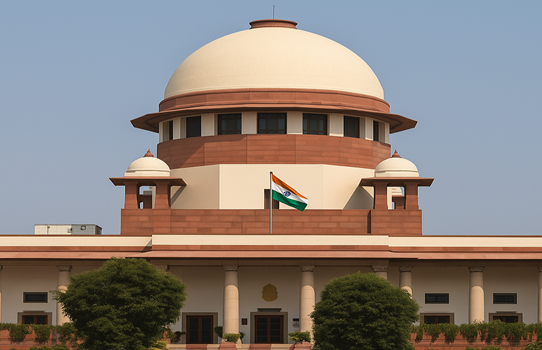
In a significant ruling aimed at ensuring experienced candidates enter the judiciary, the Supreme Court has upheld the requirement of three years of legal practice for eligibility in judicial services examinations. A Bench headed by Justice P.S. Narasimha emphasized that a minimum of three years’ experience at the Bar is essential for aspirants to develop the legal acumen and courtroom exposure necessary for a judicial role. The Court dismissed challenges to the rule, observing that it serves the public interest and maintains the quality of the subordinate judiciary. This verdict settles a long-standing debate over whether fresh law graduates should be permitted to directly enter the judicial service. The Court underlined that practical exposure equips future judges with the ability to deliver justice efficiently and fairly.

Impact of the SARFAESI Act on the Real Estate and Mortgage Markets: Challenges and Opportunities
INTRODUCTION The SARFAESI Act, 2002 (Securitisation and Reconstruction of Financial Assets and Enforcement of Security Interest Act) was introduced by the Government of India to address the growing problem of Non-Performing Assets (NPAs) within the financial system. Over the years, it has emerged as one of the most significant pieces of legislation in India’s banking and financial sectors, reshaping the way financial institutions handle distressed assets, especially in the context of loans secured by immovable property. Before the enactment of the SARFAESI Act, the process for recovering bad loans was lengthy, cumbersome, and inefficient. Banks and financial institutions had to rely on prolonged judicial processes, involving courts and complex legal procedures, which often led to delays in the resolution of bad debts. This not only impeded the financial health of banks but also caused economic inefficiencies as assets remained locked in non-performing loans. The primary objective of the SARFAESI Act is to empower banks and financial institutions to take possession of and recover the assets that have been pledged as collateral in the event of loan defaults, without needing to go through the often-protracted judicial process. This ability to directly enforce security interest gives banks the power to seize and sell assets—such as residential, commercial, and industrial properties—in a more streamlined manner. The Act aims to facilitate faster asset recovery and ensure a more efficient system for dealing with loan defaults, which in turn is expected to improve the overall health of the financial system. As a result, the SARFAESI Act has had far-reaching implications on a variety of sectors, most notably the real estate and mortgage markets. These markets, traditionally tied to the performance of loans and the security interest attached to them, have experienced both positive and negative consequences as a result of the Act’s provisions. While the primary purpose of the law was to address NPAs in the banking sector, it has also had significant side effects on property developers, borrowers, financial institutions, and other stakeholders in the real estate sector. In particular, the Act has transformed the dynamics of property transactions, both residential and commercial, and has had a lasting impact on the overall stability of the mortgage market. On one hand, the SARFAESI Act has opened up new opportunities for financial institutions, particularly by reducing the risks associated with mortgage lending. Banks can now quickly recover defaulted loans, enhancing their ability to lend further and thus boosting economic activity. Additionally, the emergence of Asset Reconstruction Companies (ARCs) has created a specialized industry that deals specifically with distressed assets, facilitating a more robust secondary market for these assets. On the other hand, the Act has led to significant challenges for borrowers, particularly in cases where defaults are triggered by unforeseen economic conditions or financial mismanagement. For individuals and small businesses who may have pledged their homes or land as collateral, the swift enforcement mechanisms of SARFAESI can lead to the forfeiture of their property. This has raised concerns about the potential for the law to disproportionately affect vulnerable sections of society, leading to legal battles and public debates over its fairness and impact on property rights. In this article, we aim to delve deeper into the complex relationship between the SARFAESI Act and the real estate and mortgage markets. We will explore the challenges faced by various stakeholders, particularly borrowers and developers, while also examining the opportunities that the Act creates for financial institutions, investors, and the broader economy. By looking at both sides of the coin, we hope to provide a comprehensive analysis of how the SARFAESI Act continues to shape the future of asset recovery and property transactions in India. CHALLENGES: The SARFAESI Act, 2002 plays a pivotal role in empowering banks and financial institutions to recover non-performing assets (NPAs) more effectively. While it has improved the asset recovery process, it also presents several challenges, particularly for borrowers, lenders, and the real estate sector. Below is a detailed examination of these challenges: 1. Impact on Borrowers Loss of Property and Financial Strain: The most direct consequence of the SARFAESI Act on borrowers is the potential loss of their property. When a borrower defaults on a loan, the bank or financial institution can take possession of the secured property without having to approach a civil court. For individual borrowers, especially those with home loans, losing their property can have severe personal, financial, and social implications. It is a particularly significant issue in cases where the borrower has exhausted all other means to repay the loan or is already in dire financial straits. Limited Recourse and Legal Protection: While the SARFAESI Act does provide a framework for borrowers to contest the action, the law heavily favors lenders. Under the act, borrowers have the option to challenge the bank’s actions before the Debt Recovery Tribunal (DRT), but the process is often slow and can take years, leaving borrowers with limited chances to retain their property in the short term. Furthermore, even though borrowers are allowed to present their case, the legal complexities make it difficult for the common individual to navigate this system. Impact on Small and Micro Businesses: Small and micro-businesses often use their personal property or assets as collateral to secure loans for business operations. In the case of default, these businesses are likely to lose both their livelihood and assets, which could lead to bankruptcy or business closure. 2. Uncertainty in the Real Estate Market Distress Sales and Falling Property Prices: A key feature of the SARFAESI Act is the ability of banks and financial institutions to sell off properties quickly in case of default, often in a distress sale situation. This can lead to a sudden influx of properties being sold at lower-than-market prices, which may cause property values in the surrounding area to decline. Reduced Investor Confidence: Investors, especially in commercial real estate, may become hesitant to invest in areas where properties are at high risk of foreclosure under SARFAESI. This is especially true in regions with a higher number of

Evolving Jurisprudence of E-Contracts in India: Challenges of Consent, Enforceability, and Consumer Protection
Introduction The digital revolution has significantly altered the landscape of commercial transactions,giving rise to electronic contracts or e-contracts—agreements formed and executed entirelythrough electronic means. These contracts are now integral to modern commerce, from onlineretail and service subscriptions to cloud agreements and fintech platforms. However, thetransition from physical to digital forms of contracting brings with it several legal challenges,particularly concerning consent, validity, enforceability, and consumer protection.In India, while the Information Technology Act, 2000 (IT Act) recognises the legal validityof electronic records and digital signatures, it does not constitute a comprehensive legal regimefor e-contracts.1 The primary legislation governing contracts remains the Indian Contract Act,1872, which was enacted long before the advent of the internet. As such, courts and legalpractitioners are often required to interpret 19th-century doctrines in the context of 21st-centurytechnology.2This article critically examines the evolving jurisprudence surrounding e-contracts in India. Itexplores how traditional principles of contract law—such as offer and acceptance, consent,capacity, and legality—are applied to digital transactions. It also addresses practical challengesposed by standard-form clickwrap and browsewrap agreements, examines issues of jurisdictionand data privacy, and highlights the vulnerabilities of consumers in an increasingly automateddigital environment. Ultimately, this article aims to evaluate the extent to which India’s legalframework is equipped to uphold contractual fairness and certainty in the age of e-commerce. II. Legal Framework Governing E-Contracts in India The legal recognition of e-contracts in India is primarily grounded in two statutes: the IndianContract Act, 1872 and the Information Technology Act, 2000. While the former establishesthe essential elements of a valid contract, the latter provides the enabling provisions that giveelectronic records and digital signatures legal status.1Information Technology Act, No. 21 of 2000, § 10-A, INDIA CODE (2000).2Indian Contract Act, No. 9 of 1872, § 10, INDIA CODE (1872). 3. Judicial InterpretationIndian courts have cautiously affirmed the validity of e-contracts. In Trimex International FZELtd. v. Vedanta Aluminium Ltd. [(2010) 3 SCC 1], the Supreme Court held that a contractconcluded by email exchanges was valid and binding, even without a signed formal agreement,as long as parties had reached consensus ad idem.Thus, while the legislative framework recognises the existence and enforceability of econtracts, judicial interpretation remains crucial to resolve ambiguities, particularly in issuesof consent and user understanding in digital transactions.3Information Technology Act, No. 21 of 2000, § 4, INDIA CODE (2000)4Id. § 55Id. First Schedule III. Types of E-Contracts and Their Enforceability E-contracts can take various forms depending on how they are presented and accepted. Theenforceability of each type hinges largely on the manner in which consent is obtained from thecontracting parties, particularly the consumer. Indian courts have begun to classify e-contractsinto three primary categories based on global legal standards6: 2. Browsewrap AgreementsBrowsewrap agreements do not require active consent; instead, they rely on implied consentthrough continued use of a website. These are more controversial, as users may not be awarethey are entering into a contract. 3. Shrinkwrap AgreementsThough originally associated with physical software packages, this term now extends toelectronic versions where terms are provided after the transaction. The user is deemed to haveaccepted them by not returning or rejecting the product/service.6Specht v. Netscape Commc’ns Corp., 306 F.3d 17 (2d Cir. 2002)7Ticketmaster Corp. v. Tickets.com, Inc., No. CV99-7654-HLH, 2003 WL 21406289 (C.D. Cal. Mar. 7, 2003) IV. Challenges in Consent and Free Will in E-Contracts One of the most pressing concerns in the enforcement of e-contracts is whether consent, afoundational element of valid contracts under Section 13 of the Indian Contract Act, isgenuinely and freely given8. In the digital age, the traditional understanding of consensus adidem (meeting of minds) is increasingly strained by automated interfaces, standardised terms,and opaque digital practices. 2. Lack of Informed ConsentDigital platforms often use complex, jargon-filled language that consumers do not understand.Moreover, many terms are buried in hyperlinks or dense paragraphs, violating the principle oftransparency. 3. Coercion Through Design (Dark Patterns)Some interfaces use “dark patterns”—manipulative design techniques that trick users intoagreeing to terms or making unintended purchases. These practices erode genuine consent and8Indian Contract Act, No. 9 of 1872, §§ 13, 14, INDIA CODE (1872)9LIC of India v. Consumer Educ. & Research Ctr., (1995) 5 SCC 482 (India)may amount to undue influence or fraud under Sections 16 and 17 of the Indian ContractAct10. 4. Minors and Incapable PartiesOnline platforms cannot reliably verify age or mental capacity. This creates legal uncertaintywhen contracts are made with minors or incompetent persons, who are not legally competentto contract under Section 1111. V. Consumer Protection and Regulatory Challenges With the rapid proliferation of digital transactions, consumers are increasingly exposed tounfair trade practices, data exploitation, and hidden contractual terms. While India has madesignificant strides in consumer protection legislation, enforcing these safeguards in the contextof e-contracts presents new challenges. 2. Absence of Data Protection LawConsent in e-contracts is often linked to personal data use. India currently lacks acomprehensive data protection law, making it difficult to hold platforms accountable forprivacy violations or misuse of consented data. 3. Asymmetry of Power and InformationThe inherent imbalance between large corporations and individual consumers leads toexploitative practices in digital contracting. Consumers often lack the knowledge, bargainingpower, or legal resources to challenge abusive terms or seek redress. 4. Jurisdictional DilemmasDigital transactions often cross territorial boundaries, making it difficult to establishjurisdiction. Indian courts have grappled with whether mere accessibility of a website issufficient to assume jurisdiction, or whether active targeting of Indian users is necessary15. Conclusion REFRENCES Article By: VIDUSHI RASTOHI from MIT-Wpu Pune BBA LLB (Hons) first year

Doctrine Of Frustration Under Indian Contract Law: Scope And Limitations
INTRODUCTION Section 56 of the Indian Contract Act, 1872, which goes as follows:“56. Agreement to do impossible act.—An agreement to do an act impossible in itself is void.Contract to do an act afterwards becoming impossible or unlawful.—A contract to do an actwhich, after the contract is made, becomes impossible, or, by reason of some event which thepromisor could not prevent, unlawful, becomes void when the act becomes impossible orunlawful.Compensation for loss through non-performance of act known to be impossible orunlawful.— Where one person has promised to do something which he knew, or, withreasonable diligence, might have known, and which the promisee did not know, to be impossibleor unlawful, such promisor must make compensation to such promisee for any loss which suchpromisee sustains through the non performance of the promise.”1is based on the doctrine of frustration. According to this doctrine, a contract is rendered voidif, after it is formed, an unforeseen event occurs that either makes the performance impossible,unlawful, or fundamentally alters the nature of the agreement from what the parties initiallyintended. Understanding this doctrine is crucial for grasping the legal ramifications whenunexpected circumstances prevent contractual duties from being carried out. Another concept,although not defined by the Act, that overlaps with the doctrine of frustration is that of ForceMajeure.In the case of Taylor v. Caldwell2, the defendants had agreed to allow the plaintiffs to use theirmusic hall on specific dates to host concerts. However, before the first scheduled event, thehall was accidentally destroyed by fire, without fault from either party. The plaintiffs filed asuit seeking compensation for their loss. The court ruled that the contract was notunconditional, as its execution relied on the continued existence of the music hall. As such, it 1 The Indian Contract Act, 1872.2 (1863) 3 B&S 826: 122 ER 309. was bound by an implied condition that performance would be excused if the subject matterceased to exist without the contractor’s fault before breach. This case marked the beginning ofa tension between two key legal doctrines: the sanctity of contract, which emphasises absoluteliability, and the principle that contracts may be discharged if fundamental assumptions sharedby both parties are nullified due to unforeseen events. According to later judgments, such as inGovindbhai Gordhanbhai Patel v. Gulam Abbas Mulla Alibhai3, a contract can only be voideddue to frustration if an unforeseeable event arises after the contract has been formed. WHAT IS MEANT BY FRUSTRATION The concept of “frustration of the contract” was explained in the case of Cricklewood Property& Investment Trust Ltd V. Leighton’s Investment Trust Ltd4 by Viscount Simon LC in thewords:“Occurrence of an intervening event or change of circumstances so fundamental as to beregarded by the law both as striking at the root of the agreement, and as entirely beyond whatwas contemplated by the parties when they entered into the contract”, and by Lord Wright inthe words:“The word frustration is here used in a technical legal sense. It is a sort of shorthand: it meansthat a contract has ceased to bind the parties because the common basis on which by mutualunderstanding it was based has failed. It would be more accurate to say, not that the contracthas been frustrated, but that there has been a failure of what in the contemplation of both partieswould be the essential condition or purpose of the performance.”Thus, frustration of contract occurs when, without fault of either party, an extraordinary andunforeseeable event destroys the core purpose or foundation of the agreement, making furtherperformance unjust or impossible. When this happens, the law may discharge the parties from 3(1977) 3 SCC 179; CONTRACT & SPECIFIC RELIEF, Avtar Singh, 12th ed., pp. 392-423.41945 AC 221 (HL); CONTRACT & SPECIFIC RELIEF, Avtar Singh, 12th ed., pp. 392-423. their obligations, as continuing to enforce the contract would no longer reflect the originalintention of the parties. GROUNDS OF FRUSTRATION In the above-cited case of Taylor v. Caldwell5, the frustration of contract happened because theperformance of the Contract became physically impossible due to the disappearance of thesubject matter. However, the doctrine of frustration also extends to cases where theperformance of the contract is physically possible, but the object the parties had in mind hasfailed to materialise. This was elucidated upon in the case of Krell v. Henry6 wherein thedefendant agreed to rent a flat from the plaintiff on June 26 and 27 to view King Edward VII’scoronation procession, which was expected to pass along that street. Although the contract didnot explicitly mention the procession, both parties understood that viewing the event was theessential purpose of the rental. When the coronation was cancelled due to the King’s illness,the defendant refused to pay the remaining rent. The court held that the cancellation frustratedthe contract because the foundation of the agreement, the viewing of the procession, had failed.Although performance (renting the flat) was still physically possible, the event that gave thecontract its commercial purpose did not occur. This case illustrates that frustration can applynot only when performance becomes impossible, but also when the core objective of thecontract, shared by both parties, is defeated by an unforeseen event. In India too in the case ofSatyabrata Ghose v. Mugneeram Bangur & Co.7 the Supreme Court of India clarified the scopeof Section 56 of the Indian Contract Act, which deals with the impossibility of performanceand the doctrine of frustration. Justice B.K. Mukherjea observed that the term “impossible” inSection 56 should not be interpreted narrowly as only referring to literal or physicalimpossibility. Instead, he explained that a contract may be considered impossible to performnot just when the act becomes physically unfeasible, but also when it becomes impracticableor useless from the standpoint of the purpose or object the parties had in mind. If an unforeseenevent or change in circumstances completely destroys the foundation upon which theagreement was made, the promisor may be excused from performing the act, as the contract is5Ibid at 2. 6(1903) 2 KB 740 (CA).7AIR 1954 SC44. deemed frustrated. Thus, the Court recognised that Section 56 applies to both types offrustration: one where performance becomes physically or legally impossible, and anotherwhere the underlying purpose
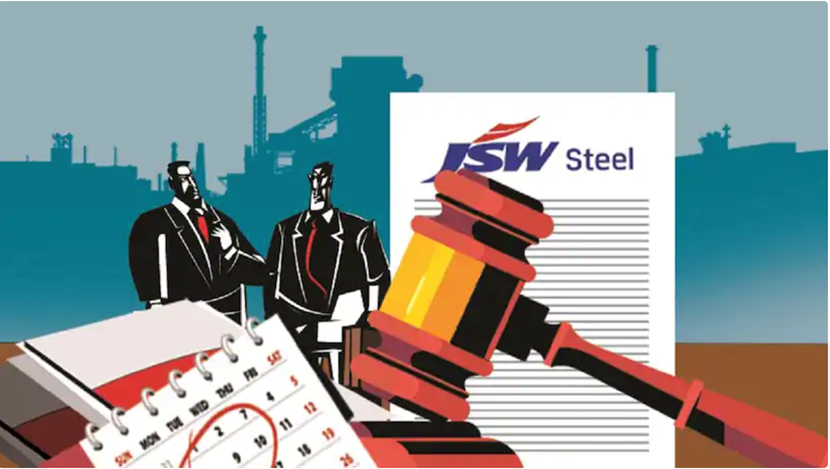
Supreme Court Cancels JSW Steel’s Rs 19,700 Crore Acquisition of Bhushan Power & Steel
The Supreme Court of India’s decision to annul the JSW Steel acquisition of Bhushan Power & Steel Ltd. has significant ramifications for India’s corporate law and insolvency framework. The deal, which had been approved under the Insolvency and Bankruptcy Code (IBC) in 2019, was worth Rs 19,700 crore and aimed to resolve Bhushan’s outstanding debts. However, the Court found that there were serious procedural flaws in the insolvency resolution process that undermined the fairness of the transaction. The Supreme Court ruled that certain aspects of the deal were not in line with the principles of fairness and transparency required under the IBC, leading to the cancellation of the deal. This ruling has wide-reaching implications for the corporate sector, particularly public sector banks that had already recovered a significant portion of Bhushan Power & Steel’s debts through this resolution. The judgment underscores the need for clarity and uniformity in the way the IBC process is followed, especially in complex corporate restructuring and acquisition transactions. This case will likely influence future corporate insolvency resolutions in India, potentially leading to more stringent guidelines on how companies are restructured and how stakeholders are treated during the process.

India-UK Free Trade Agreement Signed After Years of Negotiation
After years of complex negotiations, India and the United Kingdom have signed a Free Trade Agreement (FTA) that promises to reshape their economic relationship. The agreement focuses on eliminating tariffs on key sectors, with notable provisions for both goods and services. For instance, Indian exports such as textiles, spices, and gems will now enter the UK market duty-free. In return, the UK will see a significant reduction in tariffs on products such as whisky and gin, which will see their import duties drop from 150% to 75%, and further to 40% over the next decade. The agreement also covers intellectual property protection, allowing businesses in both countries to operate with greater certainty and legal clarity. Additionally, provisions for enhanced business mobility and greater ease of doing business between the two nations are expected to stimulate greater trade and investment flows. For India, this deal represents an important step in its strategy to engage more deeply in global trade post-pandemic. It highlights India’s increasing role in the global economic system, particularly in sectors like manufacturing, textiles, and services. This agreement could have a significant impact on job creation in both countries and deepen their economic ties, marking a major milestone in India-UK relations.
RBI Introduces Framework for Evidence-Based Regulation-Making
The Reserve Bank of India (RBI) has unveiled a new regulatory framework designed to make its policy making process more structured, transparent, and consultative. This is an attempt by the RBI to involve a broader range of stakeholders (such as banks, financial institutions, and industry experts) in the formulation and evaluation of regulations. The RBI’s new approach requires that discussion papers and impact assessments be published before any significant regulations are enacted. These papers will provide a basis for public feedback, ensuring that all parties affected by new regulations can voice their concerns and offer constructive suggestions. This approach represents a shift toward evidence-based policy making, where decisions will be grounded in solid data analysis and impact assessments. The aim is to make the regulation process more predictable and fact-driven, rather than reactionary or opaque. This is expected to increase trust in the Indian financial system, reduce the chances of regulatory overreach, and encourage better compliance by industry players. The RBI’s move reflects a global trend towards transparent governance in central banking and financial regulation. Countries across the world are recognizing that well-regulated financial systems can contribute to long-term economic stability. For India, this new framework will likely enhance the ability of the financial sector to navigate regulatory changes and adapt to global financial challenges.

Government of India Orders X (Formerly Twitter) to Block 8,000 Accounts
The move by the Indian government ordering X (formerly Twitter) to block over 8,000 user accounts has sparked controversy due to its implications for free speech and digital censorship. According to reports, these accounts were accused of spreading content that was critical of the government, particularly concerning Kashmir and India-Pakistan relations. These accounts reportedly included high-profile international journalists, media organizations, and political commentators who had been critical of the government’s stance on sensitive issues. While X complied with the government order to avoid facing potential penalties or legal repercussions, it raised concerns over the increasing government oversight of digital content in India. X expressed its opposition to the decision, highlighting that such actions are part of a broader digital censorship trend that could stifle free expression and discourage open debate in the public domain. The Indian government has justified its actions as necessary to ensure national security and prevent the spread of misinformation and hate speech. However, critics argue that these directives are being used to silence opposition voices and limit discussions on politically sensitive topics, particularly those related to the Kashmir conflict and the Indo-Pak relationship. This incident highlights the tension between government authority and tech companies operating in India, which often find themselves caught between regulatory demands from governments and the responsibility to uphold the free speech rights of their users. The episode is a part of a wider debate about content moderation, transparency, and accountability on social media platforms, with India’s growing influence in digital regulation likely to shape international policy in this space.

The Growing Role of Legal Audits in Corporate Governance
Introduction Corporate governance has emerged as a central pillar in ensuring ethical conduct, regulatory compliance, and transparency in business operations. As companies scale and face increasing scrutiny from regulators, stakeholders, and the public, legal audits have gained prominence as a proactive tool for risk management and governance enhancement. A legal audit is a comprehensive review of a company’s legal posture, contracts, compliance status, and exposure to liabilities. This blog explores the growing role of legal audits in strengthening corporate governance, their scope, benefits, and how AccuLaw Source LLP supports organizations in this area. What Is a Legal Audit? A legal audit is an organized assessment of an organization’s legal framework, documentation, and compliance with applicable laws and regulations. It helps identify legal risks, gaps, and non-compliances that could potentially lead to disputes, penalties, or reputational damage. Key Components of a Legal Audit: Why Legal Audits Matter in Corporate Governance Legal Audit vs. Financial Audit Feature Legal Audit Financial Audit Focus Legal compliance and risk Financial records and performance Conducted By Legal professionals Chartered accountants Frequency Annual or event-based Annually (mandatory for companies) Scope Laws, contracts, licenses, disputes Balance sheet, P&L, cash flow Outcome Risk matrix, compliance report Financial statements and notes When Should a Company Conduct a Legal Audit? Laws and Guidelines Relevant to Legal Audits Challenges in Conducting Legal Audits Real-World Examples Best Practices for Legal Audits Conclusion Legal audits are no longer optional—they are essential tools in the arsenal of modern corporate governance. They not only prevent regulatory non-compliance but also instill confidence in stakeholders, investors, and partners. Whether you’re an emerging startup or a well-established enterprise, conducting periodic legal audits with a trusted partner like AccuLaw Source LLP is a prudent and strategic move. Blog by: ADITYA BHARDWAJ from LAW COLLEGE DEHRADUN
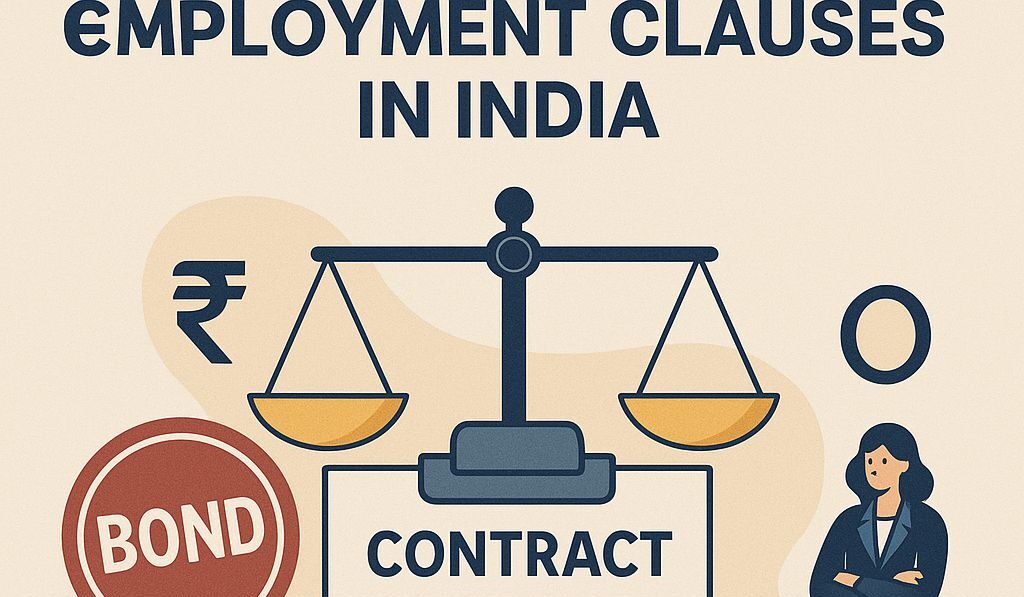
Understanding Service Bonds and Employment Clauses in India
Introduction Employment relationships in India are governed by a combination of labor laws, contractual obligations, and judicial pronouncements. Among the various employment-related agreements, service bonds and restrictive employment clauses are commonly used by employers to safeguard investments in employee training and prevent premature resignations. While such clauses can offer legitimate protection to employers, their enforceability is subject to legal scrutiny. This blog explores the nature, legality, and enforceability of service bonds and employment clauses in India, along with best practices for both employers and employees. What Is a Service Bond? A service bond is a contractual agreement between an employer and an employee that mandates the employee to serve the organization for a specified period. If the employee fails to comply, they may be liable to pay a pre-determined compensation amount (often termed as ‘bond value’). Purpose of Service Bonds Common Employment Clauses in India Legality and Enforceability of Service Bonds: Under Indian law, contracts in restraint of trade are generally void under Section 27 of the Indian Contract Act, 1872. However, courts have carved out exceptions where the bond is reasonable and protects legitimate business interests. Key Judicial Precedents Enforceability Checklist for Service Bonds ✔ Must be backed by adequate consideration (e.g., costly training) ✔ Should specify bond duration and amount clearly ✔ Must not be punitive or unconscionable ✔ Enforcement should be proportional to loss incurred ✔ Must comply with labor law norms (e.g., no bonded labor) Notice Period Clauses: Legal Aspects: Notice period clauses are valid and widely accepted. However, disputes may arise when: Non-Compete Clauses: Legal Challenges Indian courts have consistently ruled that non-compete clauses post-employment are void under Section 27. During employment, however, such restrictions are valid. Percept D’Mark (India) Pvt Ltd v. Zaheer Khan: Supreme Court ruled that post-termination non-compete agreements are void. Employee Rights and Remedies Best Practices for Employees Conclusion Service bonds and employment clauses play an important role in managing workforce expectations and protecting organizational investments. However, their legal enforceability hinges on fairness, reasonableness, and mutual consent. Both employers and employees must be aware of their rights and responsibilities while entering such agreements. A legally sound and ethically balanced employment contract helps build trust and reduces future conflicts. Blog by: Yashasvi from Law College of Dehradun